What Is Laser Dentistry?
Laser dentistry uses focused light beams to treat dental problems. This modern dental technology allows dentists to perform many procedures with less pain. In fact, laser dental procedures are often called minimally invasive dental treatments. For many people, lasers make dental care easier and more comfortable. Dentists can use lasers for both hard tissue (teeth) and soft tissue (gums) treatments. Because of this, laser dentistry is becoming more popular in clinics around the world, including laser dentistry in your city.
Common Dental Problems Treated with Lasers
Lasers can help treat many dental issues. For example, dentists use lasers to:
Additionally, lasers can help with sensitive teeth and biopsy procedures. Because lasers are precise, they often reduce damage to healthy tissue.
How Laser Dentistry Works
Laser dental procedures use a special device that creates a narrow, focused beam of light. This light targets only the area needing treatment. As a result, the dentist can remove or change tissue without touching it directly. For example, in pain-free dentistry, lasers can cut or vaporize soft tissue, seal blood vessels, or even remove decay from a tooth. The dentist selects the right type of laser for each procedure. Some lasers work best on teeth, while others are made for gums.
Benefits of Laser Dentistry
Laser dentistry offers many benefits over traditional methods. For instance, patients may notice:
Furthermore, minimally invasive dental treatments can help preserve more of your natural tooth and gum tissue. According to the Centers for Disease Control and Prevention (CDC), modern dental technology like lasers can improve patient outcomes.
Risks and Limitations of Laser Dentistry
Although laser dentistry is safe, it does have some risks. For example, lasers may not work for all dental problems. Sometimes, traditional tools are still needed. In rare cases, lasers can cause burns or damage to nearby tissue. However, trained dentists take steps to prevent these issues. The World Health Organization (WHO) notes that safety guidelines help lower risks. Not all dental insurance plans cover laser dental procedures, so it is wise to check your coverage.
What to Expect During a Laser Dental Procedure
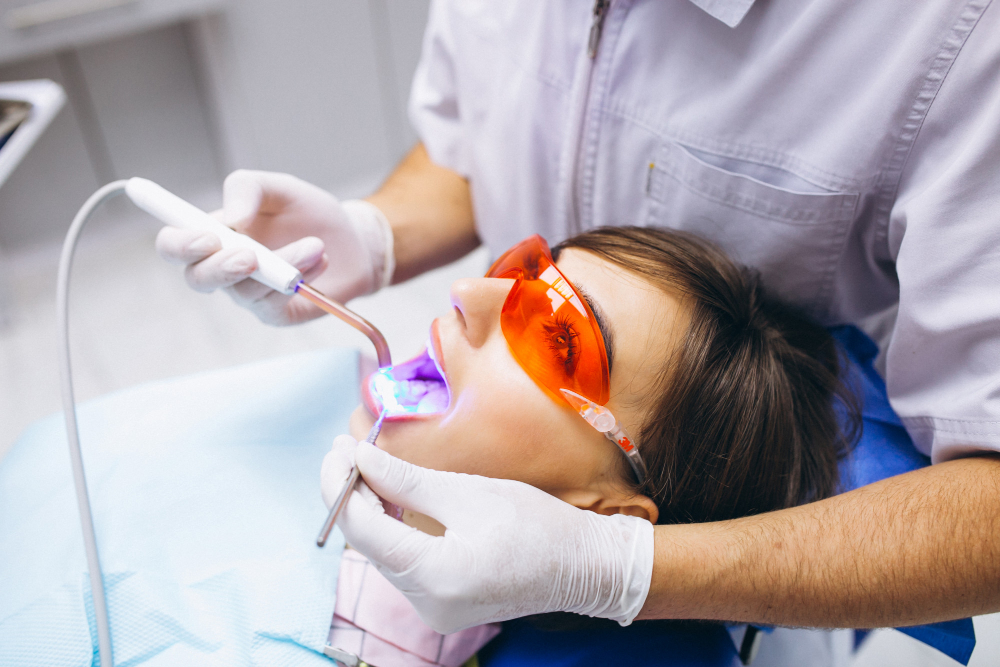
Before your treatment, the dentist will explain the process. First, you may receive protective glasses to shield your eyes. Next, the dentist will use the laser device to treat the problem area. Because lasers are precise, you may feel less discomfort than with drills or scalpels. Most people report little or no pain. Sometimes, you might hear clicking or popping sounds. After the procedure, the dentist will check your mouth to ensure everything looks good.
Aftercare and Recovery Tips
After a laser dental procedure, recovery is usually quick. Still, you should follow your dentist’s advice for the best results. For example:
Because healing is often faster, many people return to normal activities within a day.
Prevention and Maintaining Oral Health with Laser Dentistry
Even though laser dentistry offers advanced care, prevention is still important. For instance, brush and floss daily to keep your teeth and gums healthy. Visit your dentist for regular checkups. If you need treatment, ask about pain-free dentistry options, including laser dental procedures. By choosing modern dental technology, you can enjoy better oral health and a more comfortable dental experience. Consult Dr. Prathyusha now